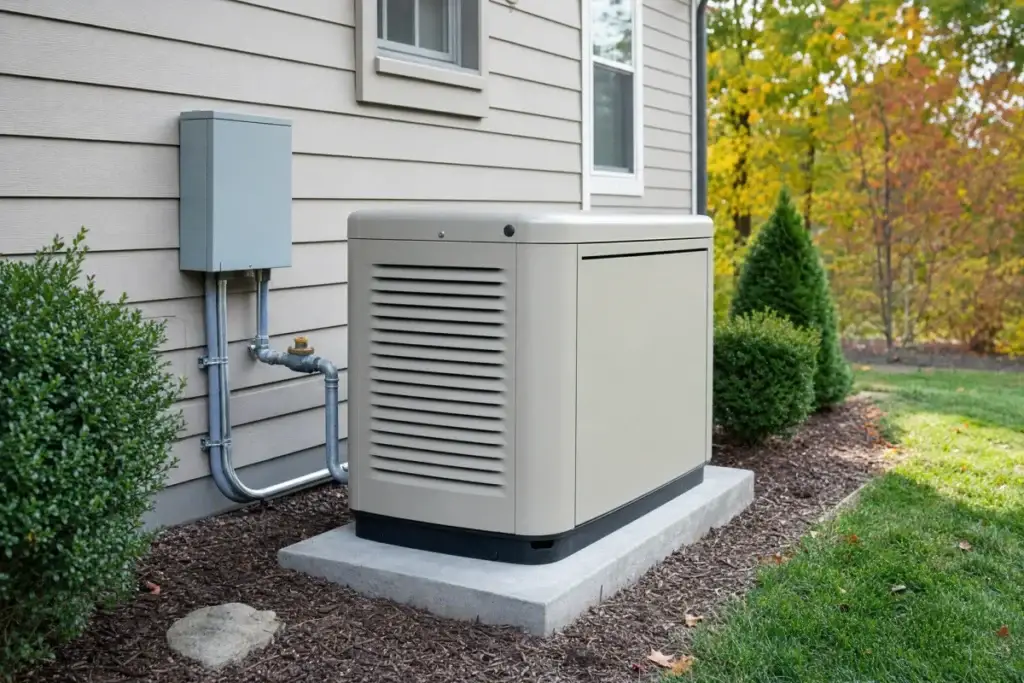
A whole-house standby generator starts on its own when the power fails and keeps the furnace, fridge, sump pump and lights running until the grid comes back. One of the first decisions when you buy one is the fuel. In most Denver homes, that choice comes down to natural gas or propane.
Natural gas is the usual choice where a gas line already serves the house. The supply is continuous, so there is no tank to refill and nothing to run out of during a long outage. The main requirement is a gas meter and line large enough to carry the generator along with the furnace, water heater and range. Sometimes the utility has to upgrade the meter first.
Propane makes sense where there is no natural gas service, or where a homeowner wants fuel stored on site. Propane keeps indefinitely without breaking down, and it carries more energy per unit than natural gas. The tradeoff is the tank. It has to be sized for how long you want to run, placed at the required distance from the house, and refilled after heavy use.
Things to weigh
- Whether natural gas already reaches the property
- How long outages usually last where you live
- Room for a propane tank and the setbacks it needs
- The generator output on each fuel, which can differ
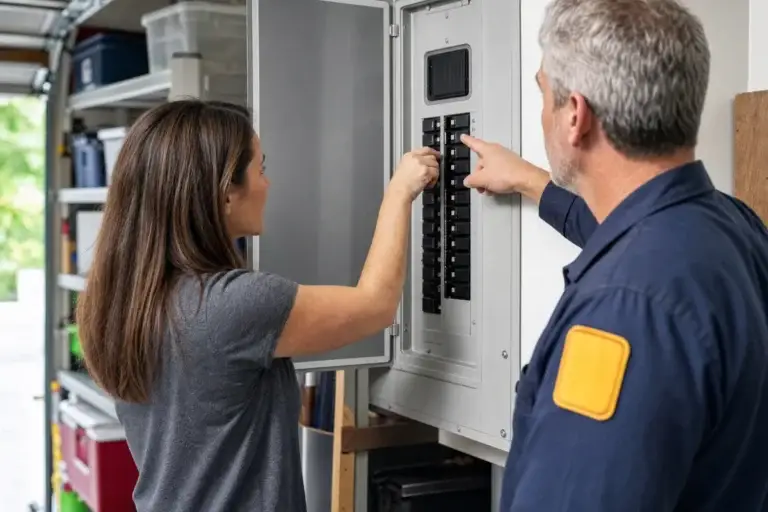
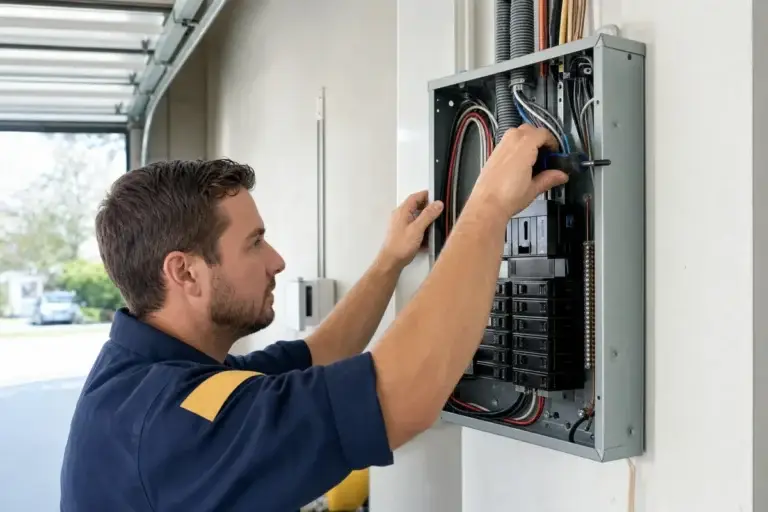
Whichever fuel you choose, a generator is only as good as its transfer switch and its connection to your panel. Northgate Electric sizes the generator to your real load and installs the transfer switch with the permit handled. Call (720) 555-0142 to talk through your options.