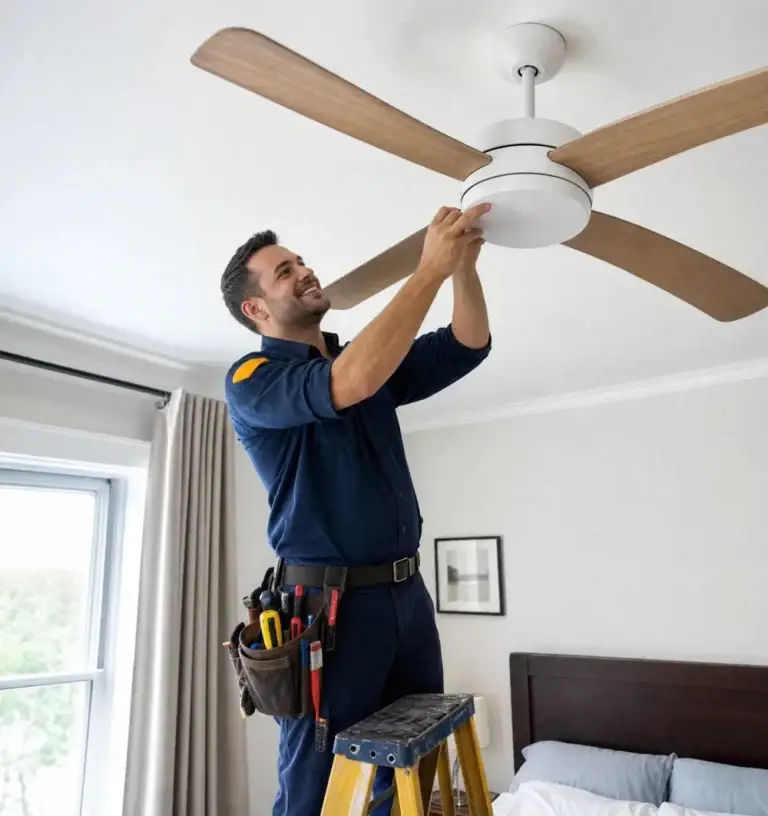
Ceiling fans installed on properly rated boxes, balanced to run quietly and wired to the controls you want, plus repairs for wobbling, humming or fans that stopped working.
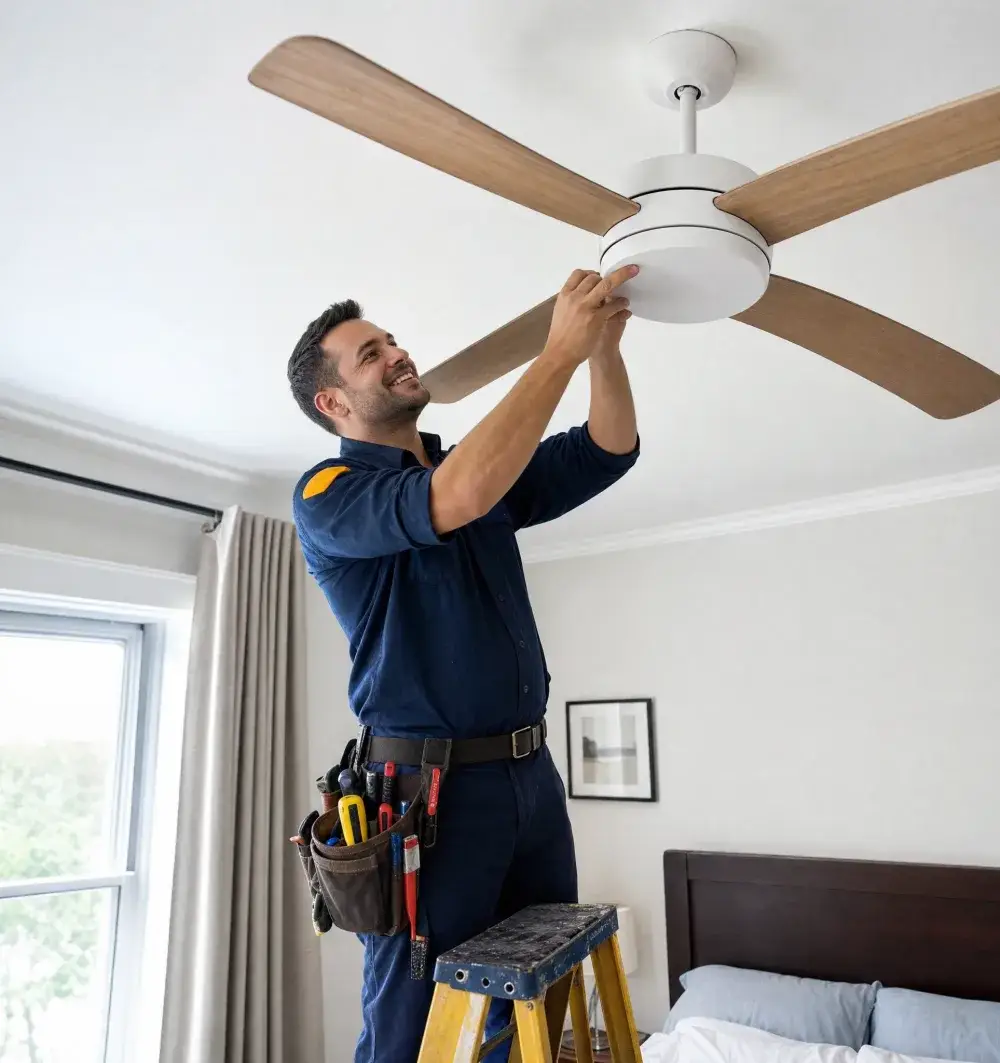
A ceiling fan is one of the most useful fixtures in a Colorado home. On a hot July afternoon it makes a room feel noticeably cooler, and in winter it can move warm air down from a vaulted ceiling. Swapping a light fixture for a fan looks like a simple job, and that is exactly why so many are installed wrong. A fan is heavier than a light, and it moves. It spins for hours, it vibrates, and every wobble tugs on whatever is holding it up. The standard electrical box behind a light fixture is not designed for that, and a fan hung from one can loosen over time and, in the worst cases, come down. Northgate Electric installs fans on boxes listed for fan support, anchored to the framing or to a brace rated for the job, and we wire them to the controls that suit the room, whether that is a wall switch, separate fan and light controls, or a remote. We also repair fans that wobble, hum, click, run at one speed only or have simply stopped. Every job starts with a written price, and we clean up before we leave.
A fan that needs attention usually lets you know in one of these ways:
Some of those are simple fixes. A slight wobble is often just blades that are out of balance, a bent blade holder, or mounting screws that have backed out, and balancing the blades and tightening the hardware usually settles it. Clicking tends to be loose screws or a rattling light kit. Humming is frequently caused by the control rather than the fan: a standard light dimmer used on a fan motor makes it hum, runs it poorly and can damage both the motor and the dimmer, so a fan should only be run from a control made for fans. A canopy that has pulled away from the ceiling is different. It can mean the box or its support is failing, and the fan should be switched off and left off until it is checked. When an old fan’s motor is failing, replacement usually makes more sense than repair, especially since newer DC motor fans run quieter and use less energy.
A proper installation starts in the ceiling, not with the fan box open on the floor. We check the existing box, and if it is not listed for fan support, we replace it. In an open attic that can mean fastening a new box directly to a joist, and in a finished ceiling a brace can be fed through the opening and expanded between the joists without cutting more drywall. Heavier fans need a box rated for their weight. Next is height. Fan manufacturers call for the blades to sit at least 7 feet above the floor, and a fan moves air best with some space between the blades and the ceiling, so we choose a downrod length that fits the room. Sloped and vaulted ceilings need an angle adapter or a canopy designed for the pitch. Blade span should suit the room, since a small fan in a large living room moves little air and a large fan in a small bedroom is overpowering. Covered porches need a fan rated for damp locations, and a fan exposed to rain needs a wet location rating. Finally, we make the connections, secure the canopy tight to the ceiling, balance the blades and run the fan through every speed and both directions before we call the job done.
How you control the fan is worth deciding before installation. If the ceiling has a single switched feed, the simplest arrangement is one wall switch for power, with fan speed and the light handled by pull chains or a remote receiver in the canopy. If you want separate wall controls for the fan and the light, the cable between the switch and the ceiling needs an extra conductor, which some homes already have and others need run. Wall-mounted fan controls, smart switches designed for fans and handheld remotes all work well when matched to the fan. Adding a fan where there has never been a fixture means running a new cable from a suitable circuit, cutting in a fan-rated box and adding a switch, which is very doable in most homes with attic access above. When a branch circuit is extended in a living area, current code can require AFCI protection for that circuit, and new work like this may need a permit, which we handle through the local building department. We plan the route so drywall patches are small and out of sight wherever possible.
Lights that flicker grab your attention fast. You try the switch again and…
Light switches look simple, but a switch that quits can mean there is a…
A room with thoughtful lighting is clear, usable, and enjoyable to work in…
Smart home upgrades appeal to people because they save time and cut down…
Many homeowners reach out for an inspection because their breaker trips when…
When a major appliance shuts off in the middle of running or trips…
Ceiling fans make a room comfortable without running the air conditioning as…
Smoke alarms save lives, and they only work when the sensors inside them…
Electric vehicles have moved from a rare sight to something you see on…
Smart doorbells add convenience and peace of mind. You can see who is…
Every outlet and switch in the house leads back to the panel. When…
An electrician can spot what the untrained eye cannot see. There may be…
Homeowners do a lot of research before committing to a remodel or new…
Switches, breakers, and outlets handle power day in and day out. Outlets…
From storms to grid shifts, surges arrive without warning and can damage…
Power outages hit harder in Colorado than in many places. A fast change…
Upgrading the lighting in a commercial space sounds simple at first. In…
Colorado evenings are best on a deck with lighting that lets you…
With the right lighting, a yard that disappears at night becomes a place…
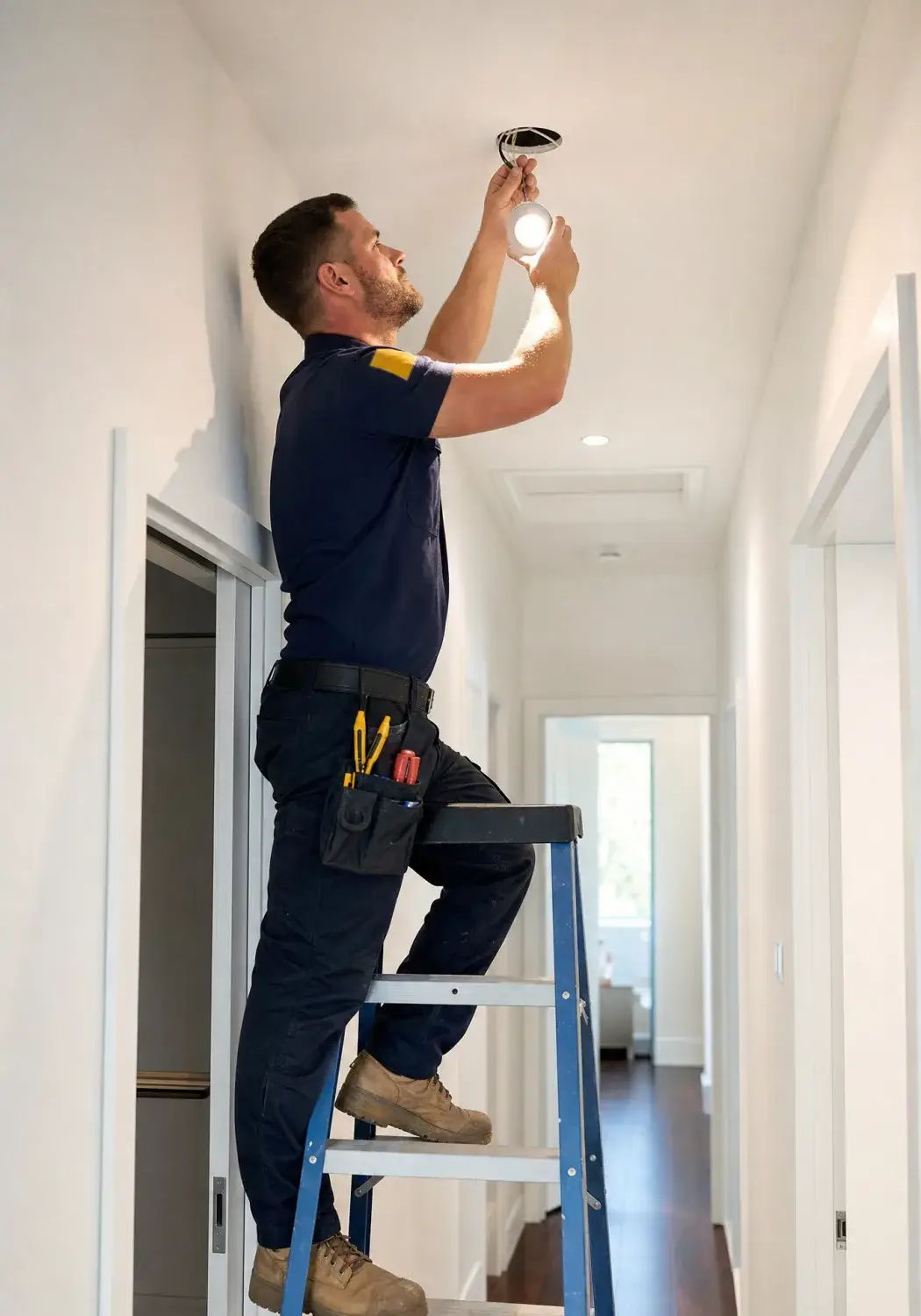
If you are updating fans, it is a good moment to look at the rest of the lighting. Kitchens and bathrooms benefit most from a layered plan: recessed lights for general brightness, under-cabinet or vanity lighting for tasks, and a decorative fixture to tie the room together. We plan the layout, choose fixtures with the right color temperature, put each layer on its own control and install damp-rated fixtures where bathrooms call for them…

Those are the usual signs that replacement is the better value. A repair makes sense when the fan is fairly new, the motor sounds healthy and the problem is balance, a loose connection, a failed capacitor or a worn pull chain switch. Capacitors in particular cause many speed problems in older AC motor fans, and replacing one is a quick repair when the correct part is available. We tell you honestly which side of that line your fan falls on, because putting labor into a failing motor rarely saves money.
Bedrooms are where fans earn their keep. Many homes around Denver rely on fans to get through summer nights, especially older houses without central air, and a quiet fan with a well-placed control makes a real difference to sleep. Set the fan to spin counterclockwise in summer so it pushes air down, and clockwise on low in winter to move warm air off the ceiling. If you are replacing several fans, doing them in one visit keeps the cost per fan down. We install and repair fans throughout the south metro, so if you need a licensed electrician in Lone Tree, CO or a neighboring community, the process is the same. Call today to schedule your fan installation.
A ceiling fan should run smoothly, quietly and securely for years. Northgate Electric installs fans on properly rated supports, wires the controls you want and fixes fans that have started to wobble, hum or fail. Call (720) 555-0142 to book a visit, or request a quote online and we will get back to you the same day.
Get $50 off electrical repairs of $500 or more. Limit one per customer. Not valid with other offers.
Get $100 off electrical panel replacement. Limit one per customer. Not valid with other offers.
Get $45 off EV charger installation. Limit one per customer. Not valid with other offers.
Get 10% off your electrical service needs. Maximum discount $100. Limit one per customer.
Straight answers to the questions Denver homeowners ask us most about ceiling fans.
Often, yes, but the existing box is usually not rated to support a fan. We replace it with a fan-rated box or brace, confirm the circuit and switch arrangement will work for the fan, and then install it.
The most common causes are unbalanced blades, a bent blade holder, or loose mounting and blade screws. Balancing the blades and tightening the hardware fix most wobbles. A wobble that comes from a loose box or bracket needs the support itself corrected.
No. A standard light dimmer is not designed for a fan motor and can cause humming, overheating and motor damage. Use a speed control, a smart control or a remote made specifically for ceiling fans.
Replacing an existing fan on a fan-rated box typically runs $150 to $350. Installing a fan where the box or support must be upgraded, or where new wiring and a switch are needed, usually runs $300 to $800. We confirm the price in writing after we see the ceiling.
Small rooms such as a home office generally suit fans of 36 inches or less, typical bedrooms suit 42 to 48 inches, and large living rooms usually need 52 inches or more. Ceiling height and the shape of the room also affect the choice.
Yes. We use a downrod long enough to bring the fan down into the living space and a mount or adapter designed for the ceiling angle, so the fan hangs level and the blades clear the slope.
Yes. Covered porches need a fan rated for damp locations, and fans exposed to rain or sprinklers need a wet location rating. We also make sure the outdoor circuit and any nearby receptacles have the GFCI protection the code requires.