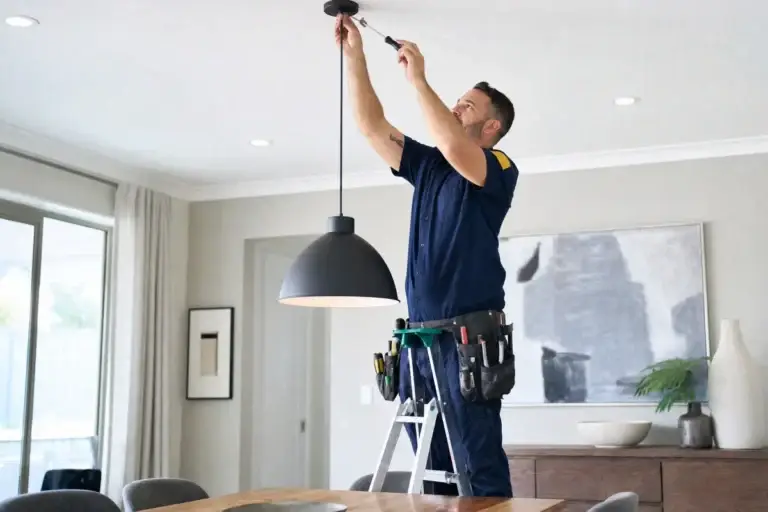
Standby and portable generator hookups from Northgate Electric, with the transfer switch sized right, the permit pulled and the generator tested before we leave.
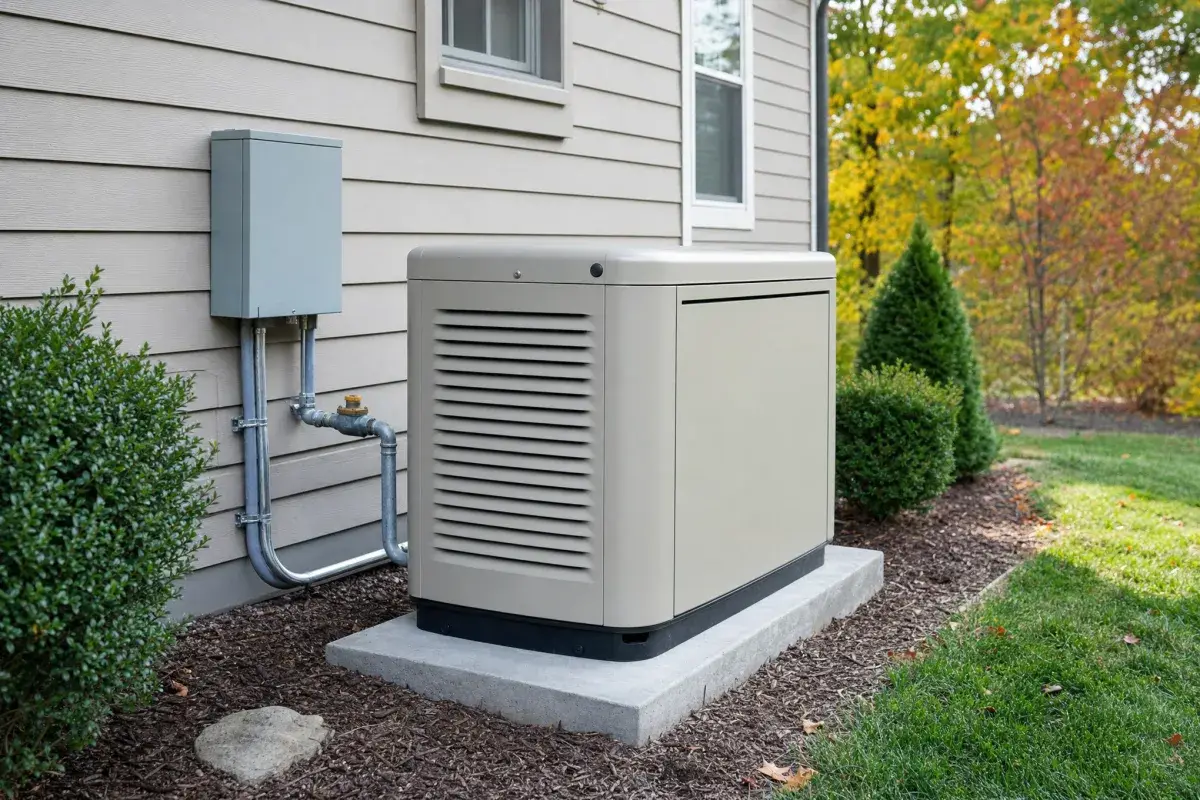
Most power outages along the Front Range are short. The ones that matter are not. A spring snowstorm that brings down lines, a summer windstorm or a planned utility shutoff can leave a house dark for hours or days, and that is when the sump pump stops, the furnace blower goes quiet and the freezer starts to warm. A generator keeps the parts of your home you depend on running until the grid comes back. There are two ways to get there. A whole-house standby generator sits on a pad outside, runs on natural gas or propane, and starts on its own shortly after the power drops. A portable generator costs less up front and can power a handful of chosen circuits through an inlet and an interlock or a manual transfer switch, as long as someone is home to start it. Either way, the connection to your panel is the part that has to be done right. A generator backfed through a dryer outlet with a homemade cord can energize the utility line outside and seriously injure a lineworker. Northgate Electric installs both kinds of systems across the Denver metro, and every job begins with what you actually need powered, not with the biggest unit on the lot.
The right generator size depends on what has to keep running during an outage, so the site visit starts with the loads that usually decide it:
Those answers point to one of two approaches. A whole-house system is sized to carry nearly everything, often with load management modules that shed a big appliance, such as the air conditioner or the EV charger, when the generator nears its limit. An essential-circuits system powers a chosen group of circuits through a smaller transfer panel, which lets a more modest generator do the job. Neither is automatically better. A household that travels often, or has a finished basement protected by a sump pump, usually wants a standby unit that starts with nobody home. A household that loses power once a winter may be well served by a portable generator and a properly installed inlet. We also look at the panel itself. An older panel with no spare space or a worn bus may need a panel upgrade before a transfer switch can be added cleanly. A standby unit also needs a gas meter and supply line big enough to run the generator, the furnace and the water heater at the same time, so we coordinate with your gas utility and a licensed plumber and the work happens in the right order.
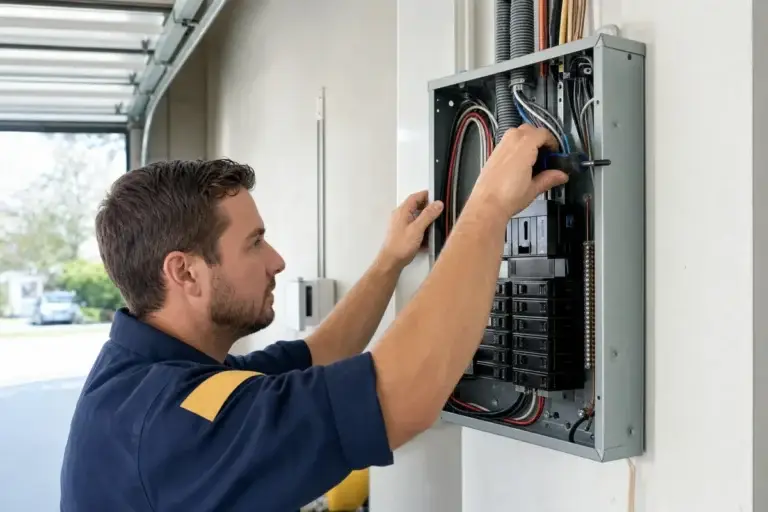
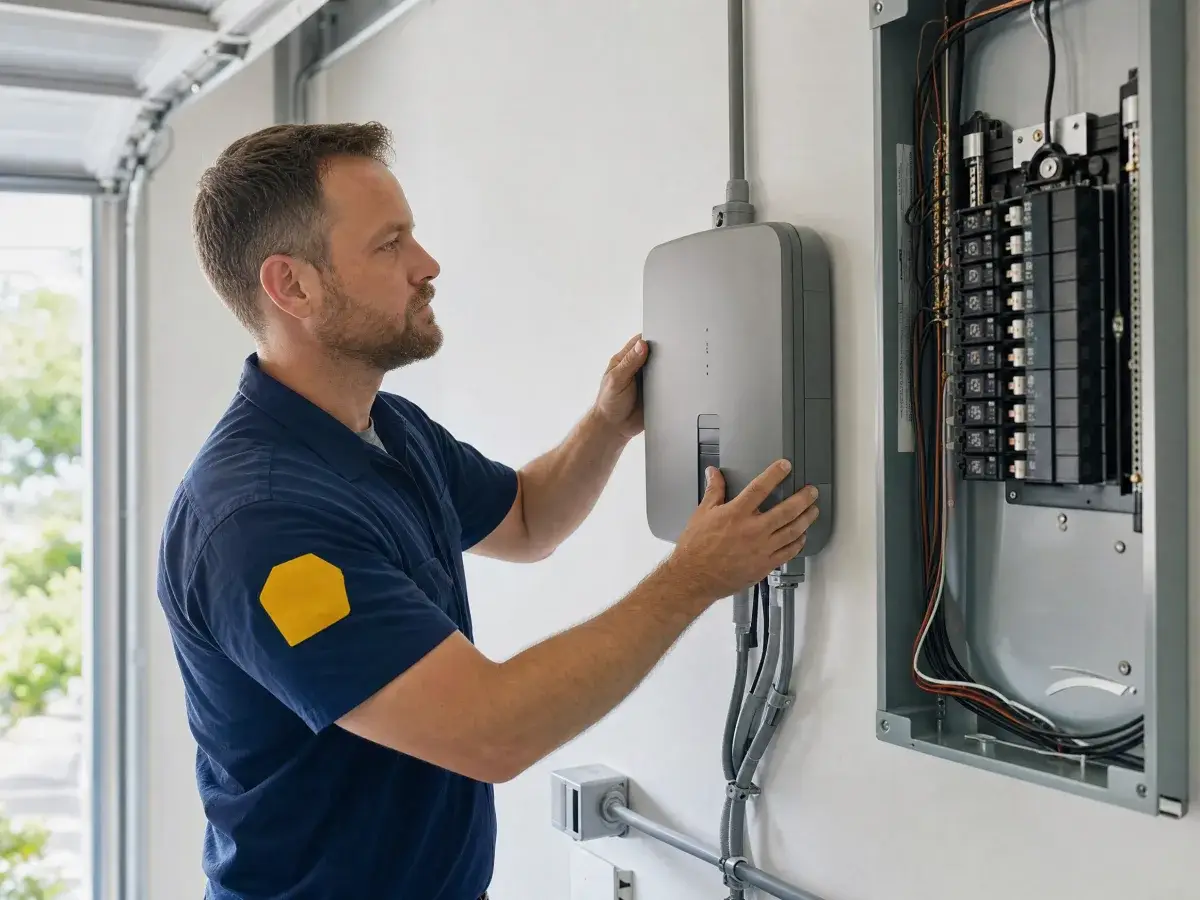
Where a standby generator sits is set by the manufacturer’s installation instructions and by local codes, which require clearances from windows, doors, vents and the gas meter so exhaust cannot find its way inside. Your HOA may add rules on location and screening, so we settle placement with those in mind before anything is ordered. The transfer switch is the heart of the system. An automatic transfer switch senses the outage, starts the generator and moves your home’s load over once the voltage is stable, then switches back and shuts the generator down after utility power returns. Just as important, it keeps the generator and the utility completely separated, which is what protects the crews working on the lines. A generator installation needs an electrical permit and inspection, and the gas connection is permitted and inspected as well. We pull the electrical permit, schedule the inspections and meet the inspector on site. Once the pad is set and the permits are issued, most standby installs take one to two days on site, although generator lead times can add weeks, so you get an honest schedule when you order. The process is the same whether the house is in central Denver or out in Parker, CO, although the permit office changes with the address.
A standby generator is an engine, and it needs attention to stay ready. Most units run a short automatic exercise cycle every week or two, which keeps the engine lubricated and lets the controller flag a problem before you need the power. You will hear it run, and that is normal. Oil, filters, spark plugs and the starting battery need service on the schedule in the owner’s manual, and a weak battery is one of the most common reasons a generator fails to start during an outage. Keep snow, shrubs and stored items clear of the enclosure so air can move freely. Portable generators come with their own rules. Run them outdoors only, well away from windows, doors and vents, never inside a garage even with the door open, and connect them only through the inlet and interlock or transfer switch installed for that purpose. Working carbon monoxide alarms on every level of the home matter whenever a generator is on the property. Before we leave, we walk you through the controller, the exercise schedule and the status lights, and we explain what routine service the unit will need.
Lights that flicker grab your attention fast. You try the switch again and…
Light switches look simple, but a switch that quits can mean there is a…
From storms to grid shifts, surges arrive without warning and can damage…
Smart home upgrades appeal to people because they save time and cut down…
Many homeowners reach out for an inspection because their breaker trips when…
When a major appliance shuts off in the middle of running or trips…
Ceiling fans make a room comfortable without running the air conditioning as…
Smoke alarms save lives, and they only work when the sensors inside them…
Electric vehicles have moved from a rare sight to something you see on…
Smart doorbells add convenience and peace of mind. You can see who is…
Every outlet and switch in the house leads back to the panel. When…
An electrician can spot what the untrained eye cannot see. There may be…
Homeowners do a lot of research before committing to a remodel or new…
Switches, breakers, and outlets handle power day in and day out. Outlets…
Power outages hit harder in Colorado than in many places. A fast change…
A room with thoughtful lighting is clear, usable, and enjoyable to work in…
Upgrading the lighting in a commercial space sounds simple at first. In…
Colorado evenings are best on a deck with lighting that lets you…
With the right lighting, a yard that disappears at night becomes a place…
An outage is rarely the only thing a storm brings. A nearby lightning strike, a utility switching fault or the moment power is restored can send a spike through your wiring that damages the electronics inside furnaces, appliances and the generator controller itself. A whole-house surge protector mounted at the panel limits those spikes before they reach the rest of the house, and it pairs naturally with a generator install because we are already working in the panel…

Not every home needs a generator, and we will tell you if yours does not. For many households, though, one of those situations turns backup power into a practical decision rather than a luxury. A basement that floods while the sump pump sits dead can cost far more than a generator. So can pipes that freeze during a long winter outage. The real question is less whether a generator is worth it and more which kind fits the way your household actually lives.
Connecting a generator is not a job for a borrowed cord and a free afternoon. The transfer equipment has to isolate your home from the utility every single time, the conductors and breaker have to match the generator’s output, and a standby unit’s gas supply has to keep up under full load. Mistakes here never show up on a sunny day. They show up during the storm, when the generator will not transfer or, worse, when it backfeeds the line. Northgate Electric handles the load calculation, the transfer switch, the permit and the startup, and we run the system through a simulated outage with you watching before we call the job done. Call today to plan your backup power.
The best time to install a generator is well before you need one, because lead times stretch once a big storm is in the forecast. Tell us what you want to keep running, where your gas meter and panel are, and whether your HOA has rules about outdoor equipment, and we will give you a written price and a realistic timeline. Call (720) 555-0142 to book a site visit, or request a quote online.
Get $50 off electrical repairs of $500 or more. Limit one per customer. Not valid with other offers.
Get $100 off electrical panel replacement. Limit one per customer. Not valid with other offers.
Get $45 off EV charger installation. Limit one per customer. Not valid with other offers.
Get 10% off your electrical service needs. Maximum discount $100. Limit one per customer.
Straight answers to the questions Denver homeowners ask us most about backup generators.
It depends on what you want running and how much power those loads need to start. Air conditioners, heat pumps and well pumps draw a large surge at startup. We add up your essential loads during the visit and size the generator and transfer switch to match.
Yes. A standby generator needs an electrical permit and inspection, and the gas connection is permitted and inspected too. An inlet and interlock for a portable generator is new electrical work and usually needs a permit as well. We handle the electrical side and coordinate the rest.
No. A cord with a plug on both ends backfeeds your wiring with no separation from the utility. It can electrocute a lineworker, damage the generator and start a fire. An inlet with an interlock or a transfer switch is the safe way to connect.
If your home already has natural gas with enough meter capacity, it is usually the simplest fuel because it never needs refilling. Propane works where gas service is not available, but it means a tank on the property and keeping it filled.
Installed whole-house standby systems in the Denver metro commonly run $9,000 to $20,000, depending on the generator size, the transfer switch, the distance to the panel and the gas work. Portable inlet setups cost far less. We confirm your price in writing after a site visit.
Follow the manufacturer’s schedule, which usually means a service visit about once a year or after a set number of run hours, covering oil, filters, spark plugs and the battery. The automatic exercise cycle keeps it ready between visits.
It can if the generator is sized for it. Many systems use a load management module or a soft start kit so the air conditioner runs without overloading the generator. Others leave it off the plan to keep the generator smaller. We show you the cost of each option.