Recessed, under-cabinet, vanity and pendant lighting for Denver kitchens and bathrooms, planned in layers and installed with the right fixtures for damp and wet locations.
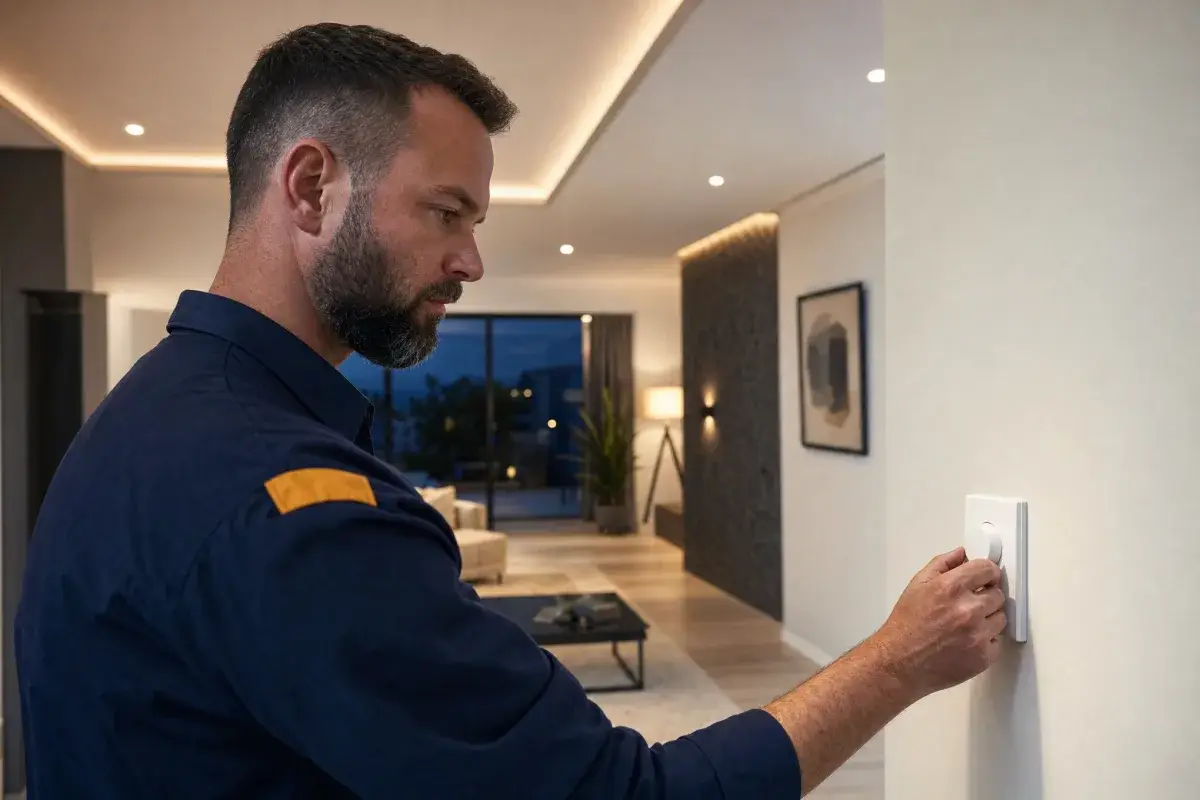
Kitchens and bathrooms are the rooms where lighting does real work. You chop vegetables, read labels, shave, put on makeup and check whether a stain came out, usually early in the morning or after dark. Yet plenty of homes still light both rooms with a single ceiling fixture in the middle, which puts your own shadow right across the counter and lights your face in the mirror from above in the least flattering way possible. Good lighting in these rooms is built in layers. Ambient light fills the room evenly, task light lands exactly where your hands are, and accent light adds depth under cabinets, inside glass doors or along a toe kick. Putting each layer on its own switch or dimmer lets the same room feel bright at breakfast and calm late at night. Kitchens and bathrooms also carry more code requirements than most rooms, because water and electricity share the space. Fixtures near a tub or shower have to be rated for the location, and receptacles need GFCI protection. Northgate Electric plans and installs lighting for kitchen and bathroom remodels across Denver, as well as simpler upgrades in rooms you are not ready to tear apart.
A lighting upgrade is usually overdue when you notice any of these in the kitchen or bathroom:
Each of those has a practical fix. In the kitchen, downlights placed over the front edge of the counters, rather than in a grid down the middle of the ceiling, light the work surface without casting your shadow on it. Under-cabinet LED strips fill the gap beneath the upper cabinets, where most prep actually happens. Pendants over an island need to hang at a height that lights the surface without blocking the view across the room. In the bathroom the goal is even light on your face, which is why fixtures mounted on each side of the mirror, or a wide fixture above it paired with side lighting, work far better than a single overhead light. Color matters as much as brightness. LED fixtures come in color temperatures from warm to cool, and choosing one consistently across the room avoids the patchwork look of mixed bulbs. A high color rendering index keeps food, skin tones and paint looking natural. We walk the room with you, talk through how the space is used, and lay out fixtures and switching on paper before any ceiling is opened.
The National Electrical Code treats bathrooms and kitchens differently from the rest of the house for good reason. Light fixtures in the zone above and around a bathtub or shower must be listed for damp locations, or for wet locations where shower spray can reach them, and pendants, chain-hung fixtures and ceiling fans are not allowed in that zone at all. A recessed light inside a shower needs a trim rated for a wet location. Bathroom receptacles and kitchen countertop receptacles need GFCI protection, bathroom receptacles are served by their own 20 amp circuit, and new kitchen circuits need AFCI protection under current code. Adding fixtures, relocating switches or rewiring during a remodel requires a permit and an inspection, and we handle that paperwork from start to finish. When a straight fixture swap on an existing box is all you need, we tell you so and keep the job simple. In older Denver homes, we also check the ceiling box before hanging anything heavier, since many boxes were never rated for the weight of a modern pendant or a fan with a light kit.
Not every project needs a remodel. Older recessed cans can often take LED retrofit trims that screw into the existing socket, which cuts energy use, runs cooler and gets rid of the dim, yellowed look of aging bulbs. Where a housing is damaged, the wrong size or not rated for contact with insulation, we replace it or switch to canless wafer lights, which mount through a small hole and need very little space above the ceiling. Dimmers are the other easy win, but they have to match the load. An old incandescent dimmer paired with LED fixtures is one of the most common causes of buzzing, flickering lights and fixtures that will not dim smoothly, so we pair every fixture with a compatible LED dimmer. Under-cabinet lighting can run from a wall switch or a motion sensor, and a low night setting in the bathroom spares you a blinding light at 3 a.m. Smart switches can set scenes for cooking, cleaning and evenings, and they often fit the boxes you already have, although many models need a neutral wire that some older switch boxes lack, so we check before you buy.
Lights that flicker grab your attention fast. You try the switch again and…
Light switches look simple, but a switch that quits can mean there is a…
Switches, breakers, and outlets handle power day in and day out. Outlets…
Smart home upgrades appeal to people because they save time and cut down…
Many homeowners reach out for an inspection because their breaker trips when…
When a major appliance shuts off in the middle of running or trips…
Ceiling fans make a room comfortable without running the air conditioning as…
Smoke alarms save lives, and they only work when the sensors inside them…
Electric vehicles have moved from a rare sight to something you see on…
Smart doorbells add convenience and peace of mind. You can see who is…
Every outlet and switch in the house leads back to the panel. When…
An electrician can spot what the untrained eye cannot see. There may be…
Homeowners do a lot of research before committing to a remodel or new…
From storms to grid shifts, surges arrive without warning and can damage…
Power outages hit harder in Colorado than in many places. A fast change…
A room with thoughtful lighting is clear, usable, and enjoyable to work in…
Upgrading the lighting in a commercial space sounds simple at first. In…
Colorado evenings are best on a deck with lighting that lets you…
With the right lighting, a yard that disappears at night becomes a place…
A kitchen or bath lighting project is the right moment to look at the outlets too. Countertop receptacles that are loose, discolored or missing GFCI protection are common in older kitchens, and many bathrooms have a single outlet that trips the moment a hair dryer runs. Replacing worn receptacles, adding GFCI protection and fitting USB or tamper-resistant outlets while we are already working in the room saves you a second visit and a second set of patched walls…


The cheapest time to change lighting is before the walls and ceiling are closed. When a remodel is already underway, running new switch legs, adding fixture boxes and wiring under-cabinet lights costs far less than it does in a finished room, and nothing needs patching afterward. It pays to settle the lighting plan before the cabinets are ordered, because under-cabinet lighting depends on the cabinet design and pendant placement depends on the final size of the island. Settling it early also means the electrician and the cabinet installer are working from the same drawing.
Bring us in early and we work alongside your contractor or cabinet designer. We mark fixture locations on the ceiling, confirm the switch positions make sense as you walk into the room, and rough in the wiring so it passes inspection before insulation and drywall go up. If you are not remodeling, the plan starts with what can be done through the existing ceiling and walls, and we tell you honestly when a small drywall patch is a better option than fishing wire. Either way, you get fixture recommendations, a switching layout and a written price up front. Call today to plan your new lighting.
A well-lit kitchen feels bigger and safer to cook in, and a well-lit bathroom makes every morning a little easier. If either room feels dim, harsh or dated, Northgate Electric can plan the upgrade with you and install it cleanly, with permits handled wherever they are required. Call (720) 555-0142 to schedule a lighting consultation, or request a quote online.
Get $50 off electrical repairs of $500 or more. Limit one per customer. Not valid with other offers.
Get $100 off electrical panel replacement. Limit one per customer. Not valid with other offers.
Get $45 off EV charger installation. Limit one per customer. Not valid with other offers.
Get 10% off your electrical service needs. Maximum discount $100. Limit one per customer.
Straight answers to the questions Denver homeowners ask us most about kitchen and bathroom lighting.
It depends on the ceiling height, the layout and the output of the fixtures, not a fixed formula. We place lights to cover the counters and walkways evenly, then add under-cabinet and pendant lighting so the downlights do not have to do everything.
Most homeowners are happiest with a warm to neutral white, roughly 2700K to 3500K, used consistently across the room. Some fixtures have a selector switch for color temperature, which makes it easy to adjust after installation.
Yes, if it is listed for a wet location, which usually means a recessed fixture with a sealed shower trim. Pendants and other hanging fixtures are not allowed in the zone directly above and around the tub or shower.
Replacing a fixture on an existing box usually does not need one. Adding new fixtures, circuits or switches, or rewiring during a remodel, does. We tell you which applies to your project and pull the permit when it is required.
The most common cause is a dimmer designed for incandescent bulbs. LED fixtures need a compatible dimmer, and swapping it usually solves the problem. If the flicker continues, a loose connection may be the cause and should be checked.
Usually, yes. Low-profile LED strips mount to the underside of existing cabinets, and we route the wiring through the cabinet or the wall to a switch, keeping the cable out of sight wherever the space allows.
A simple fixture replacement can be a few hundred dollars, while a set of new recessed lights with dimmers often runs $1,200 to $3,500 depending on the count, the ceiling access and the switching. Whatever the scope, we confirm the price in writing after we see the room.