Breakers that trip when the microwave, dryer or dishwasher runs, fixed at the source, whether the fault is the appliance, the circuit, a worn breaker or a crowded panel.
Appliances are the heaviest regular users of electricity in most homes, and they are behind most tripped breakers. The pattern is familiar: the microwave and the toaster run together and half the kitchen goes dark, the dryer stops partway through a load, or the garbage disposal trips a breaker every time it starts. It is tempting to reset the breaker and carry on, and once in a while that is the right call. When it keeps happening, though, the breaker is telling you something. It exists to protect the wire in the wall from carrying more current than it safely can, and it trips when it senses too much load, a short circuit, or current leaking to ground. Northgate Electric sorts out which of those is happening and why. Sometimes the circuit is simply overloaded and needs to be split. Sometimes the appliance itself has a failing motor or heating element. Sometimes the breaker has worn out after years of trips, or the connection where it clamps onto the panel has started to overheat. Each has a different fix, and guessing wrong wastes money. You get a clear diagnosis and a written price before any repair.
Some tripping patterns point to a simple overload, while others point to a fault that needs attention quickly:
The first pattern is usually an overload, which is common in kitchens where a coffee maker, an air fryer and a microwave share one circuit. The second suggests a problem inside the appliance or a short in its cord or connection, and we test whether the trip follows the appliance or stays with the circuit. A breaker that will not hold is protecting you from a fault that is still present, so stop resetting it and leave it off. Heat or discoloration at the panel points to a loose or damaged connection between the breaker and the bus bar, which is a fire risk that should be looked at the same day. Ground fault trips on motor appliances can come from real current leakage in an aging appliance or from moisture in the outlet, and the fix is to find that cause, not to remove the protection.
Many appliances are supposed to have a circuit of their own, and a surprising number of homes do not give them one. Electric ranges, ovens, dryers and water heaters run on dedicated 240-volt circuits sized to the appliance, commonly 30 amps for a dryer and 40 or 50 amps for a range. The electrical code calls for at least two 20-amp small appliance circuits serving kitchen countertops, and a dedicated 20-amp circuit for the laundry area. Dishwashers, disposals, built-in microwaves and refrigerators often get individual circuits as well, based on the manufacturer’s instructions and the load. A furnace needs its own circuit with a disconnect nearby. When a kitchen has been remodeled without adding circuits, or a second refrigerator and a chest freezer have been plugged in out in the garage, those rules get stretched, and nuisance tripping is the result. The fix is never a bigger breaker. Breaker size is set by the wire: 14-gauge copper is limited to 15 amps, 12-gauge to 20 and 10-gauge to 30, so a larger breaker on the same wire removes the protection and lets the wire overheat. The right fix is a new circuit, a correctly sized one, or moving a load to where there is capacity.
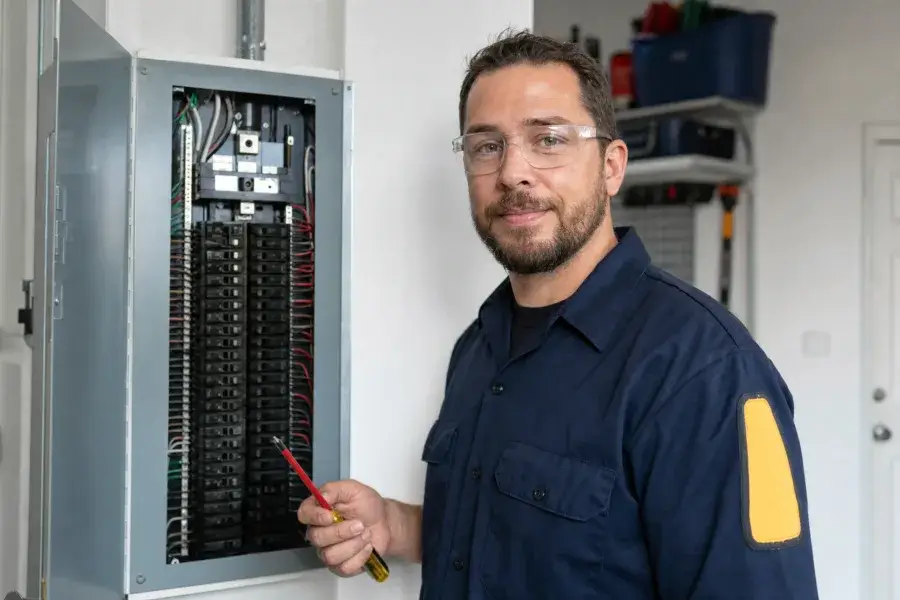
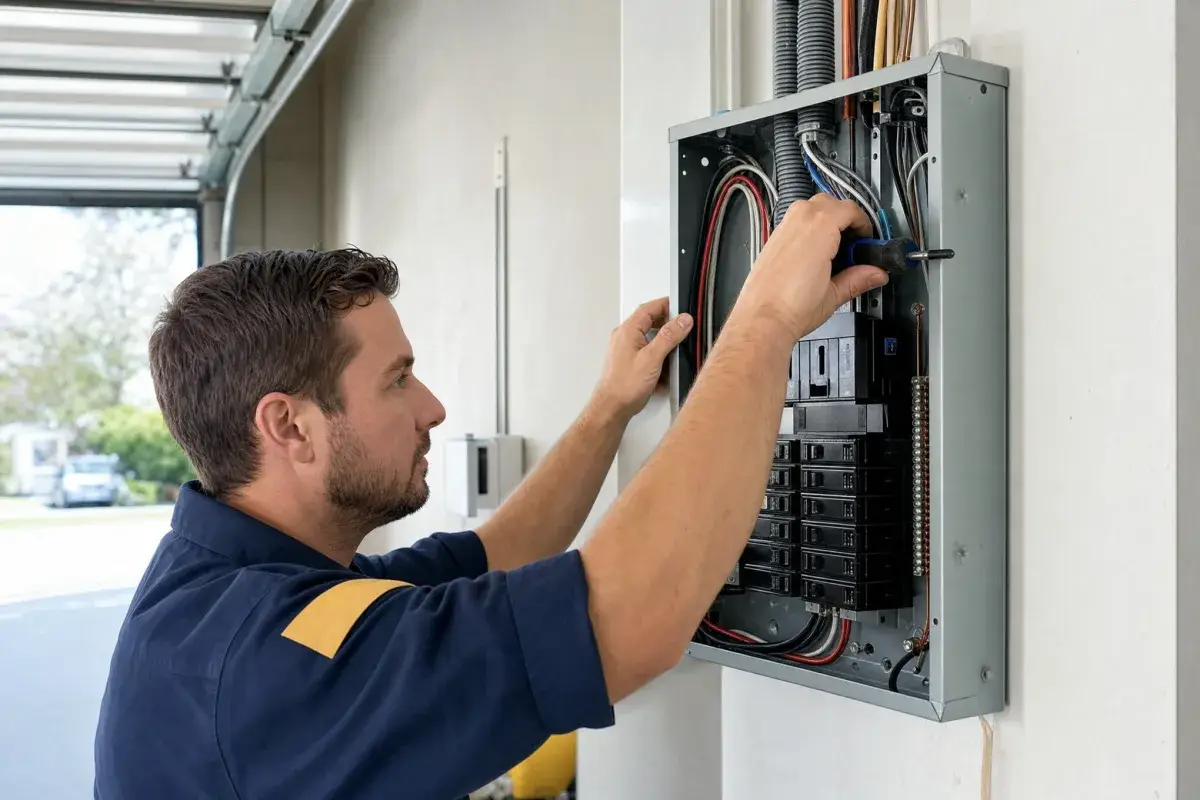
Breakers do wear out. Every trip puts stress on the internal mechanism, and a breaker that has tripped hundreds of times over the years can start tripping below its rating or, more dangerously, stop tripping when it should. Replacing one is routine for a licensed electrician, but the details matter. The new breaker has to be a type listed for your specific panel, because breakers that merely fit can make poor contact with the bus and overheat. We check the bus stab where the old breaker sat for pitting or burn marks, since a damaged stab will ruin a new breaker too. We tighten the wire terminal to the manufacturer’s specification, confirm the wire size matches the breaker, and look for signs that the panel itself is nearing the end of its life. Where the code calls for GFCI or AFCI protection on the circuit, we go over dual function breakers and other options that meet current requirements. And if the real problem is a panel with no room left, we tell you plainly rather than cramming in another tandem breaker where the panel was never designed to take one.
Lights that flicker grab your attention fast. You try the switch again and…
Light switches look simple, but a switch that quits can mean there is a…
Every outlet and switch in the house leads back to the panel. When…
Smart home upgrades appeal to people because they save time and cut down…
Many homeowners reach out for an inspection because their breaker trips when…
When a major appliance shuts off in the middle of running or trips…
Ceiling fans make a room comfortable without running the air conditioning as…
Smoke alarms save lives, and they only work when the sensors inside them…
Electric vehicles have moved from a rare sight to something you see on…
Smart doorbells add convenience and peace of mind. You can see who is…
An electrician can spot what the untrained eye cannot see. There may be…
Homeowners do a lot of research before committing to a remodel or new…
Switches, breakers, and outlets handle power day in and day out. Outlets…
From storms to grid shifts, surges arrive without warning and can damage…
Power outages hit harder in Colorado than in many places. A fast change…
A room with thoughtful lighting is clear, usable, and enjoyable to work in…
Upgrading the lighting in a commercial space sounds simple at first. In…
Colorado evenings are best on a deck with lighting that lets you…
With the right lighting, a yard that disappears at night becomes a place…
When appliance breakers trip constantly and there is no room left to add circuits, the panel is often the real limit. Kitchens, laundry rooms and garages have gained a lot of equipment since many Denver panels were installed. A properly sized replacement adds circuit space and capacity, replaces worn breakers and bus connections in one step, and makes room for new appliances without overloading anything. It starts with a load calculation, so the new panel fits the way you actually use power…

Every item on that list adds load, and several need a new dedicated circuit. It is far easier to plan that circuit before the appliance is delivered than to find out on installation day that the panel has no room or the existing outlet is the wrong type. We read the appliance’s installation instructions, check the nameplate rating, confirm the panel has the capacity and the space, and tell you exactly what the install needs. That way the appliance goes in and works the first time.
New appliance circuits generally require a permit, and we handle that along with the inspection through the local building department. GFCI requirements for kitchens and laundry areas have also expanded in recent editions of the electrical code, so a new circuit may need protection the old one never had. We explain what applies to your home and why. For expensive appliances with electronic controls, a whole-house surge protector is worth adding at the same time, since control boards are sensitive to voltage spikes. We handle appliance circuits across the metro, so whether you are in Denver or need a licensed electrician in Aurora, CO, the process is the same. Call today to plan your new circuit.
A breaker that keeps tripping is doing its job, and the real fix is finding out why. Northgate Electric diagnoses the appliance, the circuit and the panel, then makes a repair that stops the trips without removing the protection. Call (720) 555-0142 to book a visit, or request service online and we will reply the same day.
Get $50 off electrical repairs of $500 or more. Limit one per customer. Not valid with other offers.
Get $100 off electrical panel replacement. Limit one per customer. Not valid with other offers.
Get $45 off EV charger installation. Limit one per customer. Not valid with other offers.
Get 10% off your electrical service needs. Maximum discount $100. Limit one per customer.
Straight answers to the questions Denver homeowners ask us most about appliance circuits and breakers.
Usually because it shares a circuit with other kitchen appliances. A microwave draws a lot of current, and together with a toaster or coffee maker it can exceed what a 20-amp circuit allows. If it trips with nothing else running, the microwave itself may be failing.
No. The breaker size is set by the wire it protects. A larger breaker on the same wire lets the wire overheat before the breaker ever trips. The safe fixes are spreading the load across circuits or adding a correctly sized new circuit.
Motor appliances can leak small amounts of current as they age, and moisture in a garage outlet adds to it. Garage receptacles still require GFCI protection, so we find the source, whether that is the appliance, the outlet or the circuit, rather than bypassing the protection.
A breaker that trips with very little load, feels hot, buzzes, will not stay reset or looks scorched may be failing. We test it under load and inspect its connection to the panel before deciding whether the breaker, the wiring or the appliance is at fault.
Replacing a standard breaker typically runs $150 to $400. A new dedicated appliance circuit usually runs $300 to $1,200, depending on the distance from the panel and how easy the wall and ceiling access is. Both are confirmed in a written price after we see the panel.
If you are switching from gas, almost always. An electric range typically needs a 240-volt circuit of 40 or 50 amps, which a gas range outlet cannot provide. We confirm the requirement from the range installation instructions and check your panel capacity.
Resetting once after an obvious overload is fine. If a breaker trips repeatedly, or trips again right after being reset, leave it off and call. Repeated resets stress the breaker and let a real fault keep heating the wiring.