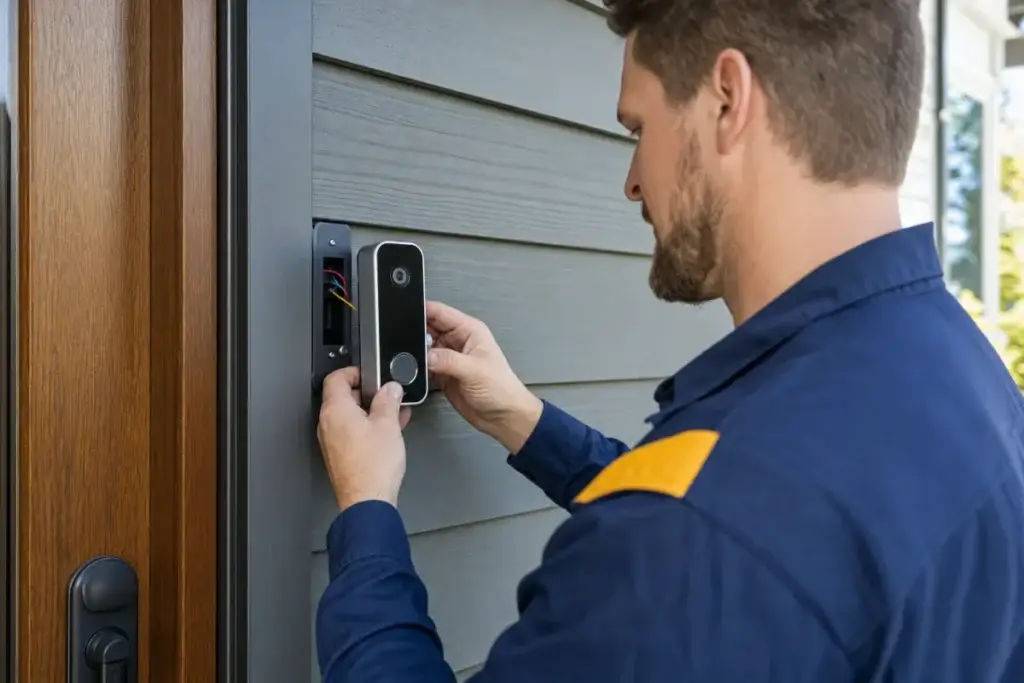
Swapping an old doorbell button for a video doorbell looks like a ten-minute job, and the box usually says so. The trouble starts behind the wall. Most homes built before smart doorbells existed run the chime on a small transformer that delivers somewhere between 10 and 16 volts. Many video doorbells want more than that, and they want it continuously, because the camera, the Wi-Fi radio and the night vision never switch off.
When the transformer is too weak, the symptoms are easy to misread. The doorbell reboots at random, the video drops, or the app reports low power. When the transformer is working too hard, it gets hot, and an overheating transformer inside a closet or attic is not something to ignore. Some owners notice a steady hum from the chime instead, which happens when the doorbell pulls a little current through the chime coil all day long.
Mechanical chimes cause their own problems. Some video doorbells need a small power kit fitted inside the chime so the chime still rings without starving the doorbell. Skip it, and the chime may buzz, ring faintly, or stop working altogether.
What we check on a doorbell install
- The transformer rating, and whether it matches the new device
- Where the transformer is mounted and whether it runs warm
- The condition of the old low-voltage wiring, which is often decades old
- Whether the chime needs a power kit or a digital replacement
Most of these fixes are quick once you know what you are looking at. If your new doorbell keeps dropping offline or the chime has started humming, call Northgate Electric at (720) 555-0142 and we will get the doorbell and the chime working together properly.