When people think about surge damage, they picture a TV or a computer. The equipment that can cost far more to repair sits outside the house and in the basement or utility closet. Modern air conditioners, heat pumps and furnaces run on circuit boards, sensors and variable-speed motors, and those parts are just as sensitive to a voltage spike as any laptop.
Surges come from two directions. Some arrive from outside, from lightning near a power line or the utility switching loads on the grid, and Colorado’s summer thunderstorms bring plenty of lightning. Others start inside your home. Every time a large motor starts or stops, including the compressor in your own AC, it can send a small spike back through the wiring. One small spike does little, but years of them wear down electronics a little at a time.
What proper protection looks like
One device is not enough. A proper setup for heating and cooling equipment covers three things.
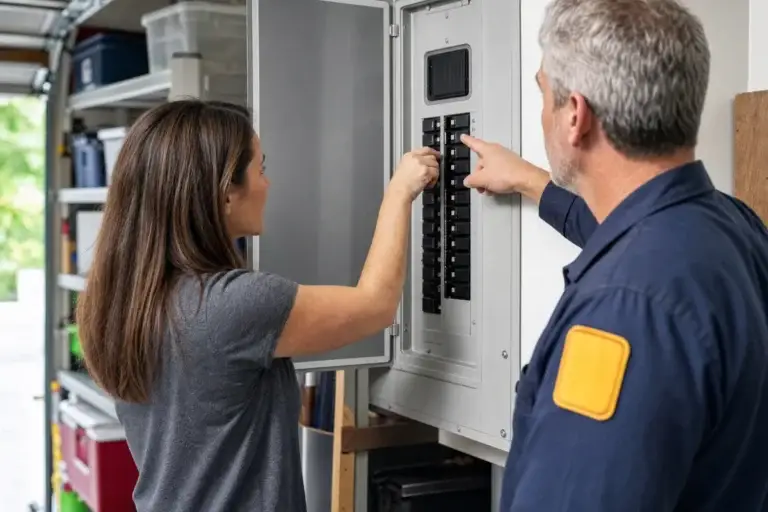
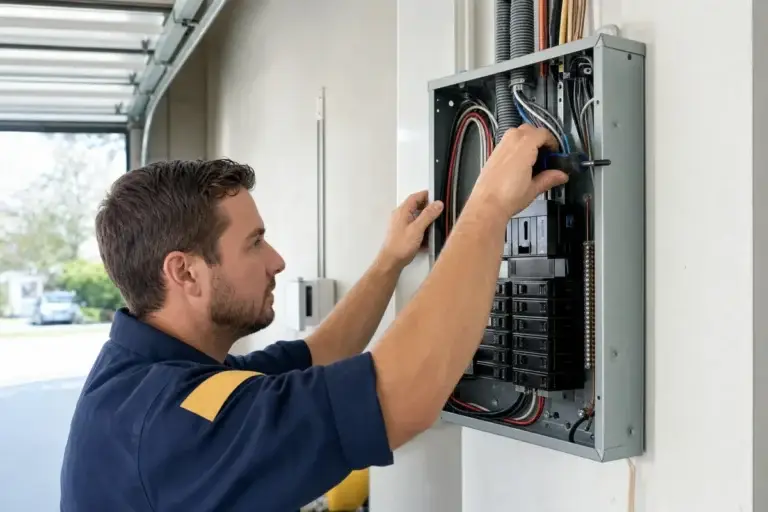
- A Type 2 surge protective device at the panel to clamp large surges before they reach any circuit
- Point-of-use protection at the equipment, installed at the outdoor unit or furnace to handle what gets past the panel and the spikes the equipment creates itself
- A check of the disconnect and wiring at the condenser, since a loose connection there causes its own voltage problems
The first two do not replace each other. A panel device cannot fully stop spikes that start at the compressor, and the outdoor condenser has no plug to put a power strip on at all.
Surge protection will not make a failing system last forever, and no device guarantees protection from a direct lightning strike. What it does is reduce the slow damage that shortens the life of control boards and motors, and it lowers the odds of a dead system after a storm. Our surge protection installation covers the panel and the equipment in one visit.
To protect your heating and cooling equipment, call Northgate Electric at (720) 555-0142.